(and 5 things you probably didn't know)
If you think March 8 is just a day for wishes, stories and discounts, leave a little room for a twist.
International Women’s Day didn't start as a “celebration.” It started as a demand.
And that's where the story gets much more interesting.

It didn't start with pink – it started with a strike
In 1908, textile workers in New York City took to the streets demanding better working conditions, shorter hours and the right to vote.
It wasn't glamorous.
They were tired, underpaid and determined.
Two years later, in 1910, German activist Clara Zetkin proposed establishing an international day dedicated to women's rights.
And so it began.

Purple isn't random
Purple is the official color of the day.
It symbolizes dignity and justice.
And no, it wasn't chosen because it “goes with” spring.
Its roots go back to the suffragette movement of the early 20th century, especially in the United Kingdom, where purple (along with green and white) was used as a symbol of dignity and political struggle.
Later, purple took hold internationally as the day's main symbol, precisely because it carried this weight:
the idea that equality isn't a “concession,” but a right

It's not “happy Women's Day.” It's a reminder.
March 8 isn't an anniversary of existing.
It's a reminder of progress.
Yes, today women lead businesses, scientific teams and creative projects.
But the pay gap exists.
Balancing career and motherhood isn't a given.
Visibility in leadership roles isn't automatic.
The day doesn't say “well done for existing.”
It says “we keep going.”

Sunglasses were once seen as provocative
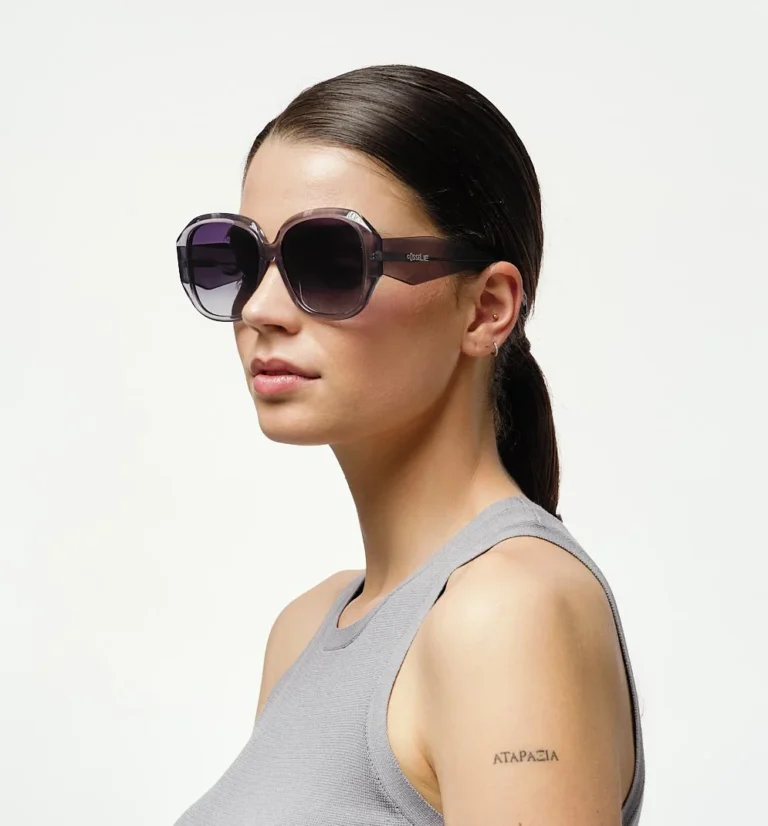
In the early 20th century, women who wore sunglasses in public were considered… provocative.
Their gaze was no longer “visible.”
And that bothered people.
Later, figures like Audrey Hepburn and Jackie Kennedy turned sunglasses into a symbol of elegance and independence.
An accessory became a statement.

And what does that mean today?
It means that strength isn't a hashtag.
It's everyday life.
It's the woman who starts a business.
The woman who changes careers at 40.
The woman raising a child on her own.
The woman who doesn't apologize for her choices.
Confidence isn't a filter.
It isn't a trend.
It isn't seasonal.
It's cultivated.
In COSSELIE we believe in light.
And light doesn't ask for permission.
It shows.
Women's Day isn't about “honoring.”
It's about recognizing.
Learning.
Keeping going.
And, of course, wearing what makes us feel exactly the way we want: visible.
And because for us recognition isn't just words but action,
from March 6 to 8 we're marking the day with -10% on all women's sunglasses.